
Getting Hitched, Part 3
An Alfred Hitchcock addendum: appraisals of early works and a late masterpiece

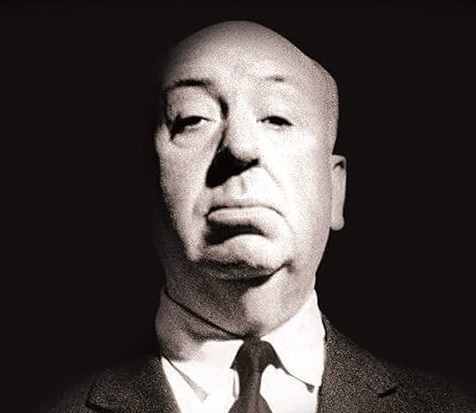
As promised in my first Alfred Hitchcock post, in this follow-up I’m reprinting a pair of my other pieces on the filmmaker. (Careful readers will observe that I pilfered some language from these articles for my Hi-Pointe program notes.) The first, which appeared in The Riverfront Times, appraises the series Early Hitchcock, which was presented at Webster University in 1993. Because of the article’s age, you’ll find some anachronistic references to VHS tapes and Blockbuster Video. The second dates from 2010, when the St. Louis Symphony Orchestra (SLSO) commemorated the 50th anniversary of Hitchcock’s Psycho with screenings that featured live performances of Bernard Herrmann’s score. My former RFT colleague Eddie Silva, who was then publications manager for SLSO, kindly invited me to write about the film for the Playbill program that previewed the concerts. Space limitations forced me to take a knife to the piece – how appropriate! – but here I provide the unexpurgated version, with cuts restored.
Early Hitchcock (1993)
Even in this media-saturated age, with its obsessive interest in public personalities, Alfred Hitchcock arguably remains the most famous director in film history. Because Hitchcock constructed his persona with the same care he lavished on his meticulously crafted movies, his rotund silhouette remains immediately recognizable today, several decades after his death.
One of the welcome results of Hitchcock’s continuing fame is the wide availability of his work. Videotape and cable, of course, have made accessible a vast number of films, but Hitchcock’s oeuvre is especially well represented on store shelves and TV screens, with tape-rental giant Blockbuster privileging Hitch with his own section. This familiarity with Hitchcock’s movies thus makes the rarities contained in Webster University’s new series on the director all the more surprising. Offering looks at films unseen even by devotees, Early Hitchcock provides a welcome – though by no means exhaustive – overview of Hitch’s under-screened and frequently undervalued work in his native England.
Although Hitchcock’s current reputation is largely built on the films he made after being lured across the Atlantic by producer David O. Selznick in 1940 for Rebecca, the director was highly regarded – both in Great Britain and abroad – well before his emigration to Hollywood. Early Hitchcock, somewhat puzzlingly, jumbles the movies’ chronology and excludes a few key films – most notably the silent The Lodger (1926), which introduced several of Hitchcock’s repeated subjects and visual motifs, and The Man Who Knew Too Much (1934), which served as the template for all subsequent Hitchcockian thrillers – but the movies included in the series, seen in any order, clearly evidence the filmmaking skill that first attracted Selznick’s attention.
The most accomplished – and characteristic – films featured in Early Hitchcock are those he made just before sailing for the States during the extraordinarily fertile years of 1935-38. These movies, a cycle of a half-dozen thrillers inaugurated by The Man Who Knew Too Much, with their elaborate chases, opaquely motivated spies, quarrelsome couples, falsely accused men, and warily game women, are already well known to avid moviegoers, but the high-quality prints – part of the British Film Institute’s Champagne Piper-Heidsieck Classic Film Collection – should make re-experiencing the works all the more pleasurable. The five featured in the series all offer some reward – only The Secret Agent disappoints, especially given the promise of its cast, which includes John Gielgud and Peter Lorre – but the darker The Thirty-Nine Steps and Sabotage (which is especially bleak and troubling) pay more dividends than the lighthearted, even antic Young and Innocent and The Lady Vanishes.
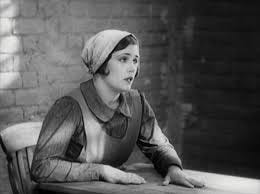
What’s most exciting about Early Hitchcock, however, are the films with which we’re less familiar. The silent Blackmail – in which an early Hitchcock blonde kills a date rapist and faces extortion – is a particular treat, demonstrating Hitchcock’s absolute mastery of silent-film conventions and provocatively expanding on some of the signature themes first seen in The Lodger (e.g., the suppression of women by a patriarchal society – see Rebecca and Vertigo – and the corrupt hypocrisy of the law – see Notorious and North by Northwest). The generally available sound version of Blackmail – made immediately after the silent was completed and released first as Britain’s inaugural talkie – is also compelling, but the silent is slightly nimbler and more assured in its use of the camera and far less deliberate in its acting style.
Also fascinating is another alternative version of a Hitchcock film: Mary, a German-language remake of Murder! shot by the director on the same sets – and using most of the same camera setups – with a different cast. Although both Murder! and Mary tell the same story – a rather indifferent whodunit enlivened by a theatrical background, some amusing bits of comic business, and inventive approaches to shooting conventional material – Mary benefits from a slightly less busy approach, eliminating some extraneous and poorly integrated material to concentrate more closely on the mystery. (One odd change: In Murder! the killer is a half-caste, i.e., he’s of racially mixed blood; in Mary he’s an escaped convict. Given Germany’s then-current obsession with racial purity, it’s curious that the plots were not reversed.)
Far less interesting is the appalling Elstree Calling, a curiosity recommended to completists only. A revue intended to showcase the new sound technology, the movie is a compilation of vaudeville routines that features some indifferent singing, bizarrely inept dancing, and lame (and occasionally antisemitic) comedy. The elaborately hand-tinted color sequences offer some brief relief, but their charm quickly fades. Hitchcock’s actual participation in Elstree Calling – Elstree refers to the studio at which the film was shot – was fairly minimal by all accounts, and no one is clear just what “interpolated material” he actually shot (Adrian Brunel is named as director). Hitch is generally credited with the awkward framing and linking sequences – which exploit another new technology, television, for some banal humor – and the fitfully amusing scenes involving Blackmail’s Donald Calthorp’s thwarted attempts at Shakespeare (Calthorp’s broadly absurd reading of Taming of the Shrew – replete with motorcycle and a pie-throwing Anna May Wong as Catherine – offers the film’s only real laughs).
A pair of adaptations of well-known authors – Sean O’Casey’s Juno and the Paycock and John Galsworthy’s The Skin Game – provides a glimpse of Hitchcock’s fairly anonymous work-for-hire during the early sound period. O’Casey’s moving play about Ireland’s struggle for independence, which seems temperamentally better suited to Ford than Hitchcock, remains uncomfortably stagebound but features some fine performances by the Abbey Theatre players, particularly Sara Allgood as Juno. The Skin Game is more fully a film, but the director seems curiously uninvolved in this story of conflict between the supposedly benign aristocracy and the piggish nouveau riche. Also be warned that the print’s relatively poor quality – no better one exists – causes some early trouble, making dialogue virtually incomprehensible.
Two films unavailable for screening – Rich and Strange, a critically lauded movie of deep personal significance to Hitchcock about an estranged couple on an exotic vacation, and Number Seventeen, a brisk thriller that’s more spoofing than serious – round out the series’ selections from the early ’30s.
Hitchcock’s last film of the ’30s, Jamaica Inn, officially concluded his British career. Adapted from a Daphne du Maurier story – as was, far more successfully, his next film, Rebecca – Jamaica Inn manages to stir the blood on occasion with its tale of shipwrecking plunderers on the Cornwall coast during the early 1800s. Some cheap effects work and an overly busy plot full of neck-snapping reversals diminish its power, but the film is surprisingly robust entertainment, with the gorgeous Maureen O’Hara in her screen debut as the film’s resourceful heroine, a terrifying performance by Leslie Banks as the villainous Joss, and a typically overripe turn by Charles Laughton as the twisted Sir Humphrey Pengallan.
Finally, Early Hitchcock boasts two of the director’s rarest works: the propaganda shorts “Aventure Malgache” and “Bon Voyage.” Lured back to his homeland in 1943 to help with the war effort, Hitchcock made these terse but gripping films with French actors, many of them Resistance fighters, living in England. (The films were intended for distribution in France and its colonies.) “Bon Voyage,” about a downed RAF pilot on the run from a POW camp, is particularly taut and intriguing, but “Aventure Malgache,” the true story of its lead actor, an unlikely Resistance leader on Madagascar, also fascinates with its sophisticated detailing of the political and philosophical conflicts among the island’s citizenry.
Early Hitchcock is an admittedly uneven collection of films – though only Elstree Calling can be termed truly bad – but it performs an invaluable service to the Hitchcock acolyte and provides the casual fan with some delightful moviegoing. Although the appeal of some of Early Hitchcock’s historical treasures is obviously limited, any lover of the cinema will find something to enjoy in this splendid series.
Psycho and SLSO (2010)
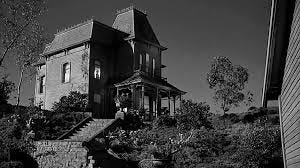
If he were still among us – and he’s still very much preserved as a plump mummy in the basement of our collective unconscious – Alfred Hitchcock would likely give a mordant chuckle at the notion of Psycho, his disreputable, down-market shocker, screening in the grand, high-culture environs of Powell Symphony Hall. Not that Hitchcock was uncomfortable with the concert hall – one of the director’s most memorably gripping set pieces, in both versions of The Man Who Knew Too Much, actually unfolds in London’s Royal Albert Hall.
And films are certainly appropriate fare in Powell, which began its life in 1925 as a movie palace, the St. Louis Theatre, and is thus equally amenable to cinema and symphonies. In that sense, Psycho and SLSO’s two other filmic offerings this season – Charlie Chaplin’s City Lights and The Fellowship of the Ring – are entirely in keeping with the building’s legacy.
When it was released in 1960, however, Psycho was clearly not intended for tony roadshow venues like the St. Louis, which specialized in exclusive, reserved-seat runs of Hollywood’s glossiest, most expensively mounted spectacles. Psycho was the antithesis of those extravaganzas: a low-budget, black-and-white horror film shot by an efficient but largely anonymous crew from Hitchcock’s TV show.
For Hitchcock, Psycho represented a deliberate break from the plush, star-driven productions that immediately preceded the film (Vertigo with James Stewart in 1958, North by Northwest with Cary Grant in 1959). Hitchcock, of course, was infamous for once claiming that “actors are cattle” (he later humorously amended the quote, averring that he merely said that “actors should be treated like cattle”). By dispatching Janet Leigh, its top-billed star, a third of the way through the film, Psycho can thus be read – albeit on its most superficial level – as Hitchcock’s perverse revenge on all those pesky thespians who insisted on sullying the perfect movie he’d already finished in his mind before shooting.
Both a reflection of changing societal mores and a response to Henri-Georges Clouzot’s Les Diaboliques (1955) – an envelope-pushing, jump-inducing French thriller that many critics heretically declared superior to the work of the Master of the Suspense – Psycho was also designed as a less genteel, more graphic film than Hitchcock’s previous work. The director had always taken delight in tweaking the censor’s blue nose – the seemingly endless clinch and kiss of Notorious, the train-in-the-tunnel visual double entendre of North by Northwest’s conclusion – but Psycho is Hitchcock’s most outrageous provocation, a viciously potent cocktail of illicit sex, semi-nudity, voyeurism, bloodletting, and cross-dressing. And perhaps most transgressive of all: a clearly visible (and audible) toilet, a then-unheard-of affront to moviegoers’ allegedly delicate sensibilities.
None of which should be interpreted as criticism, for however modest its means and original ambitions, Psycho’s accomplishments are vast. The last of Hitchcock’s masterworks – though some will champion The Birds or spiritual kin Frenzy – Psycho approaches perfection. Although flawed by an unnecessary and overlong summation scene – in which a psychiatrist tediously explicates the obvious – and diminished in impact by the pallid, exploitative imitators that followed, Psycho still manages to shock, provoke, and entertain with its mixture of pitch-black comedy and agonizing suspense.
The film’s best known for its bold, entirely unprecedented narrative reversal and the dazzlingly edited shower sequence on which it pivots, but even if you know all of its surprises, Psycho holds your interest in a viselike grip with careful foreshadowing (a showerhead glimpsed through a doorway, windshield wipers tracing the same arc as the killer’s knife), brilliant use of the subjective camera (especially during Lila’s terrifying exploration of the Bates’ gothic home), and fine performances by Leigh, Martin Balsam, Vera Miles, and, of course, Anthony Perkins as the bizarrely sympathetic Norman.
For all of its deviations from the filmmaker’s usual patterns, Psycho is also quintessentially Hitchcockian, featuring such signature elements as staircases, knives, blond heroines, oddly attractive villains, serial killers, and dominant mothers. From a larger thematic perspective, the persistent influence of the dead on the living – their seemingly palpable presence – was explored by Hitchcock not just in Psycho but also in Rebecca and, most devastatingly, in Vertigo.
Psycho’s connection to the rest of Hitchcock’s oeuvre is further tightened by his decision to rely on trusted collaborators rather than inexpensive substitutes in a few key roles. Among the most important was Saul Bass, who designed the striking titles of Vertigo and North by Northwest. Bass produced similarly evocative work in Psycho, and he was additionally retained as an ambiguously defined “visual consultant.” (Over the years, Bass has actually laid claim to the shower sequence, but though his detailed storyboards undeniably provided a precise map, Hitchcock was sitting solo at the directorial steering wheel when bringing the scenes home.)
But the reason SLSO is celebrating Psycho’s 50th anniversary isn’t Bass or even Hitchcock: It’s composer Bernard Herrmann, who contributed the most indelible aspect of the film’s overall design with his insistent screeching-violins score.
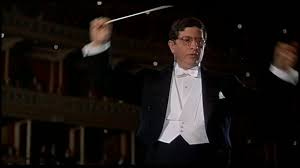
Herrmann began his film-composing career auspiciously, contributing the score to what most consider the greatest film ever made, Citizen Kane (1941), and winning his only Academy Award the same year for The Devil and Daniel Webster. He ended on a similar high note in 1976, with the lush orchestral score to Brian De Palma’s Obsession and the moodily evocative jazz horns and martial drums of Martin Scorsese’s Taxi Driver.
Although at times a contentious, difficult artist, Herrmann established a close working relationship with Hitchcock that extended over eight films, only ending when Hitchcock rejected Herrmann’s score for Torn Curtain at the studio’s behest. The composer’s work on Vertigo – so essential to establishing the narcotizing, dream-like mood of the film – is arguably his finest work for Hitchcock, but the Psycho score is no doubt his most famous.
Herrmann claimed that Psycho was the first film score to rely exclusively on strings, and he wrote in the liner notes to the London Philharmonic Orchestra’s recording of the music: “I felt that I was able to complement the black and white photography of the film with a black and white sound.” Few would dispute its stark, chilling effectiveness.
Regrettably, the groundbreaking nature of Herrmann’s score was not recognized at the time, with the Academy of Motion Picture Arts and Sciences failing even to nominate the composer for an Oscar. A rueful Herrmann wrote to Hitchcock: “Composing music for films (and television) is in many ways a very unrewarding artistic endeavor. So often one’s efforts are scarcely even noticed, not because the music is unworthy, nor that the picture may be more or less successful, but because it is frequently just taken for granted.”
Fifty years later, Herrmann finally receives his rightful due with SLSO’s live performances of his still-innovative, ever-astonishing score for Psycho.
For more on Psycho, consult Stephen Rebello’s essential Alfred Hitchcock and the Making of Psycho, Raymond Durgnat’s A Long Hard Look at Psycho, and David Thomson’s The Moment of Psycho.
Of PSYCHO, Cliff writes: "The last of Hitchcock’s masterworks – though some will champion The Birds or spiritual kin Frenzy – Psycho approaches perfection. Although flawed by an unnecessary and overlong summation scene – in which a psychiatrist tediously explicates the obvious – and diminished in impact by the pallid, exploitative imitators that followed, Psycho still manages to shock, provoke, and entertain with its mixture of pitch-black comedy and agonizing suspense."
PSYCHO is a masterpiece, all right. But Cliff (an exceptional critic) is out of sync with the other major Hitchcock scholars when it comes to the films that came later.
First, MARNIE. Robin Wood's book "Hitchcock Films" is still the most respected study of a director by a film critic, even though the book is now more than a half-century old. Wood wrote that MARNIE was "one of Hitchcock's richest, most fully achieved and mature masterpieces." He spent a good part of his essay going after the critics who were dismissive of the film.
There is an anecdote about Martin Scorsese sitting down to watch MARNIE in a theatre, and being unable to move for a while after it was over, so overwhelmed was he by the film.
Second, THE BIRDS. Robin Wood writes: "At first it seemed to me a great disappointment. Now, after repeated viewing, it seems to me among Hitchcock's finest achievements."
I would agree with that and I think most Hitchcock scholars would agree with that. Andrew Sarris rated THE BIRDS the second-best film of 1963, after John Ford's DONOVAN'S REEF.
Finally, there's PSYCHO. Cliff says that the film is "flawed by an unnecessary and overlong summation scene." Oh, but there are many of us who love that scene. It's Andrew Sarris's favorite part of the film, and he's written many times that he finds it hilarious. I sat next to Sarris in one of his classes at Columbia University and I heard Sarris chuckle as somebody called Norman Bates "a transvestite," only to have Oakland reply, "not exactly."
That summation scene is a laugh riot, from start to finish, because it so perfectly captures the irony and perversion of the film. It also captures Hitchcock's delight in manipulating the audience by subverting their genre expectations. Oakland is "explaining everything" for the dumb people in the room, and for many of the dumb viewers of the film. But of course he's explaining nothing. The film's mysteries are far deeper than that. Dave Kehr has written that if there's one point to be made about PSYCHO, it's that Norman Bates is Hitchcock, himself. He's also every viewer of the film. We are pulling for Norman all the way, after all.
Oakland's remarks are similar to the Foreward to Nabokov's novel "Lolita," supposedly written by a psychoanalyst named John Ray Jr., Ph.D., of Widworth, Mass. The "Foreword" to "Lolita" is as funny as anything ever written, but again, like Oakland's remarks in PSYCHO, it was taken at face-value back in the '50s and '60s when "Lolita" was still being read by smart people everywhere.
I'm not going to call Oakland's comments the best part of PSYCHO. I'll just say that it's yet another peerlessly brilliant sequence in a film that is an artistic landmark, not just of the 20th century but also of Western civilization.