
Sayles Pitch
In praise of indie filmmaking legend John Sayles

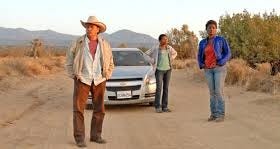
In March 2013, while scouting potential selections for the St. Louis International Film Festival (SLIFF), I was in the audience at Austin’s Violet Crown theater when John Sayles’ Go for Sisters premiered at SXSW. Astonishingly – and damningly – it remains the last feature that Sayles has directed.
Of course, the filmmaker has always struggled to finance his more personal work. As a screenwriter, Sayles was (and surely remains) fully capable of flexing well-developed genre muscles: He started his film career with exploitation master Roger Corman – Piranha (1978) was his first produced script – and has long supported his own films with screenwriting, both credited and uncredited, for unambiguously commercial projects. But the 18 movies Sayles has directed steadfastly refused to conform to the lowest-common-denominator demands of the Hollywood studios, and that defiant independence has undeniably complicated his fundraising prospects and box-office returns.
Still, despite those challenges, for more than four decades – since his 1979 directing debut with The Return of the Secaucus 7 – no more than three years passed between Sayles films. But now more than 12 years have elapsed since Go for Sisters had its exceedingly modest theatrical run – appearing on only a dozen screens during the week of its widest release, according to the film-industry website The Numbers – and the prospect of a new Sayles-directed movie appears to grow ever more remote.
His long absence from theaters notwithstanding, Sayles has hardly stopped working. Instead of making films, however, he’s largely kept busy writing a clutch of ambitious books, and the publication of his latest, Crucible, prompted me to gather a few past writings on Sayles’ long, diverse career. (Once I’ve finished the new novel, I’ll also offer a follow-up review.)
Sayles, I should emphasize, remains active in film and TV, but most of his post-2013 work remains trapped in development hell, a punishing landscape that the writer has explored extensively. For evidence, consult the special-collections website of the University of Michigan Library, where Sayles’ papers reside: The unproduced-screenplay section features a jaw-dropping 48 entries, and that only includes work through 2017. Some of those unrealized projects, thankfully, have seeded his novels, with two of his recent books – Jamie MacGillivray: The Renegade’s Journey (2022) and To Save the Man (2025) – evolving from abandoned film scripts. Although denied the opportunity to direct any new films, Sayles has at least managed to secure a handful of writing credits since Go for Sisters: He was a co-scenarist of the Mexican film Sonora, The Devil’s Highway (2018) – which sadly failed to receive a U.S. release – and wrote three 2018 episodes of the TNT series The Alienist.
By happy coincidence, Sayles more recently served as one of the three writers of the Civil War-set miniseries The Gray House, which begins streaming on Amazon in just a few weeks, debuting on Feb. 26. Executive-produced by Kevin Costner and Morgan Freeman, the eight-episode series is directed by Roland Joffé, who remains best known for his early films The Killing Fields and The Mission.
I’ve followed Sayles’ films with avidity since The Return of the Secaucus 7, and after discovering his debut novel, Pride of the Bimbos (1975), a few years after its publication, I’ve been just as faithful in tracking his considerable literary output. I’ve also had the pleasure of meeting Sayles on a few occasions: In 2007, SLIFF hosted Sayles and Maggie Renzi, his longtime filmmaking and life partner, awarding them a joint Lifetime Achievement Award and screening Honeydripper. A few years later, in 2011, I was invited to introduce Sayles at a local reading when his epic novel A Moment in the Sun was released. And, as you might expect, I managed to buttonhole the convivial Sayles for a brief conversation at the SXSW screening of Go for Sisters mentioned up top.
Once I began reviewing for The Riverfront Times, I reviewed all of his work for about a decade, starting with a terse two-sentence evaluation of Baby It’s You in my first year-end Top 10 list for the RFT (I suspect the film was released locally before I started freelancing for the paper in May 1983). Also reproduced below are pieces on The Brother from Another Planet, the music video for “Born in the U.S.A.,” Matewan, and City of Hope. I’ve already reprinted my review of Eight Men Out (1988) as part of a Re/Views post on baseball films, but completists can find it here. After that, although I continued to watch and admire the director’s work, I ceded reviewing his films to my colleagues, particularly Diane Carson, whose Sayles expertise I couldn’t realistically match (she’s the editor of two books on the filmmaker, John Sayles: Interviews [1999] and, with Heidi Kenaga, Sayles Talk: New Perspectives on Independent Filmmaker John Sayles [2005]).
As an introduction to the reviews, I’m also including a bio of Sayles I wrote in the fall of 2019, when I served on the selection committee for the 2020 recipient of the International Humanities Prize given biennially by Washington University’s Center for the Humanities. After the committee members proposed potential candidates, we were then asked to provide background information on the possibilities with which we were most familiar. Because I had proposed Sayles as one of my selections, I put together the biographical sketch below. Regrettably, our work was soon rendered moot by the Covid-19 pandemic, which caused the cancellation of the 2020 event. (The prize didn’t resume until 2022, when cartoonist Alison Bechdel received the award.)
John Sayles Bio (2019)
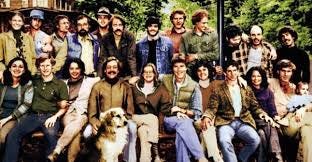
Although certainly not the first American-independent filmmaker, John Sayles is quite likely the most prolific and longest-lasting auteur to operate proudly and stubbornly outside the Hollywood studio system. And while writing and directing 18 well-regarded features over the past 40 years, Sayles has maintained a separate, equally impressive career as a short-story writer and novelist.
Sayles made his directorial debut with The Return of the Secaucus 7 (1979), a micro-budgeted ($60,000) narrative centered on the melancholic weekend reunion of a once-tight group of college friends and antiwar activists. In 1997, the film was named to the Library of Congress’ National Film Registry, which honors “culturally, historically, or aesthetically significant” films.
The film was financed by money earned from Sayles’ scripts for the Roger Corman exploitation vehicles Piranha and The Lady in Red, and the filmmaker has continued to do work-for-hire on more commercial projects – e.g., Alligator, The Howling, The Clan of the Cave Bear, The Spiderwick Chronicles – as a means of funding his own films, which are far less conventional. Sayles also has contributed scripts to other independent films, including the episodic Enormous Changes at the Last Minute (1983) – a fine adaptation of three Grace Paley short stories – and the enchanting Bill Forsyth caper comedy Breaking In (1989). For TV, he created the two-season drama Shannon’s Deal (1990-91), whose 1989 pilot telefilm earned an Edgar Award.
When writing and directing his own films, Sayles consistently offers character-driven work – intelligent but accessible – that often focuses on under-represented or traditionally marginalized groups, whether the protagonists are Black (The Brother from Another Planet [1984], City of Hope [1991], Honeydripper [2007], Go for Sisters [2013]), Latinx (Lone Star [1996], the largely Spanish-language Men with Guns [1997]), or LGBTQ (the pioneering lesbian drama Lianna [1983]). His films frequently place women’s stories at their center (Passion Fish [1992], Sunshine State [2002], Casa de los babys [2003]), which is no doubt a reflection of his longtime collaboration with his life and producing partner, Maggie Renzi, which began with The Return of the Secaucus 7, in which she co-starred.
Although Sayles’ films incisively examine contemporary concerns from a progressive perspective, he’s also made several works that tackle early-20th-century historical subjects: Matewan (1987), about labor-union organizing at a 1920 West Virginia coal mine; Eight Men Out (1988), about the Black Sox baseball scandal during the 1919 World Series; and Amigo (2010), about the Philippine-American War of 1899-1902. A further demonstration of his impressive range is The Secret of Roan Inish (1994), an Ireland-set, family-friendly fantasy about seal-women (or selkies).
Sayles has been nominated for two Academy Awards for Best Original Screenplay (Passion Fish, Lone Star) and four Writers Guild of America Awards (winning for the telefilm Unnatural Causes [1987]). He also was honored for career achievement by the Writers Guild with the 2005 Ian McLellan Hunter Award.
Sayles is clearly best known for his films, but his prose-writing career actually predates his first screenplay. The comic picaresque Pride of the Bimbos, about a barnstorming, cross-dressing baseball team led by a little person, was published in 1975, and his novel Union Dues – which intertwines radical politics and coal mining – was a National Book Award finalist in 1977. The short-story collection The Anarchists’ Convention and Other Stories – which contains the 1975 O. Henry Award-winning “I-80 Nebraska M.490-M.205” – appeared in 1979. His other prose work includes the novel Los Gusanos (1991), about the Cuban Revolution and its ramifications among exiles in Miami; the nonfiction Thinking in Pictures: The Making of the Movie ‘Matewan’ (1997); and a second story collection, Dillinger in Hollywood (2004).
His most recent novel, the McSweeney’s-published A Moment in the Sun (2011), is a sprawling 935-page epic that takes a prismatic view of more than a dozen characters at the turn of the 20th century. In its review, the New York Times offers this description: “In its scale, multiple plots, rigorous attention to setting and technology, colloquial exactitude, race consciousness and suspicion of political power, A Moment in the Sun is admirably Pynchonian.” A new novel, Yellow Earth – set in the North Dakota shale-oil fields and the neighboring Three Nations Indian Reservation – is set for publication by Haymarket Press in January 2020.
An important side note: When he was named an early (1983) recipient of the MacArthur Fellowship – the so-called Genius Grant – Sayles devoted the prize money to making The Brother from Another Planet (1984), his science-fictional slave allegory. Because he continues to struggle to find financing for his film work, it’s safe to assume that Sayles would make similar use of the cash award that accompanies the International Humanities Prize.
Baby It’s You (1983)

A low-budget wrong-side-of-the-tracks romance, Baby It’s You is a touching and uncannily precise portrait of adolescents warily edging their way toward adulthood. John Sayles’ direction remains awkward and rough-edged, but his dialogue is rich with natural color and rhythms and his eye for the subtle class distinction has never been sharper.
The Brother from Another Planet (1984)
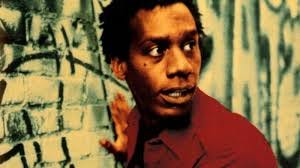
John Sayles’ The Brother from Another Planet is such a joyously optimistic delight that you forgive its occasional gaffes and longueurs: Movies this personable and sincere deserve critical forbearance. A mute slave from outer space, the Brother (Joe Morton) is a Black E.T. on the freedom road, dropping to Earth on Ellis Island with bounty hunters (Sayles and David Strathairn) close behind. Eventually landing in Harlem, the Brother meets a colorful mix of gabby locals and settles right in – one more thread in the city’s rich tapestry. A wonderful talkfest, The Brother from Another Planet – like Sayles’ novel Union Dues – is a raconteur’s delight, full of anecdotal detail and small tangential stories. (Fischer Stevens’ high-speed card trick alone is worth the price of admission.) The acting is of variable quality – although Morton is superb – and the film shows signs of its low-budget origins, but The Brother from Another Planet has such abundant verbal wit and style that the clunky set-ups do no harm. The Brother, ironically, is one fine talker.
“Born in the U.S.A.” (1984)
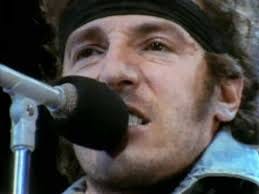
Readers wired for cable should take note of the new Bruce Springsteen video now entering MTV rotation. (I watch for research purposes only, of course.) Directed by talented novelist and independent filmmaker John Sayles (The Return of the Secaucus 7, Baby It’s You, Lianna, and the recently released The Brother from Another Planet), this gutsy concert footage of “Born in the U.S.A.” inspires. Intercutting tight closeups of an impassioned Springsteen with alternately harsh and positive images of working-class life, Sayles captures the song’s edgy, raw power, its angry optimism. You’ll have to wade through garbage to find it, but the video is sufficiently cleansing to warrant the dirty work.
Matewan (1987)
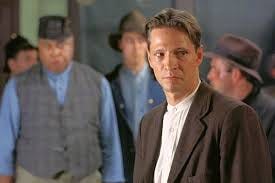
John Sayles’ Matewan is remarkable as much for the bold liberalism of its choice of subject matter as for the terrible, moving beauty of the story’s execution. Preaching the gospel of unionism at a decidedly conservative time – an era that celebrates the individualist’s success rather than collectivist struggle – Sayles risks empty pews and a restless, even hostile congregation. But Matewan, despite its unabashed leftism, appeals to – and touches – converted and unconverted alike, employing emotional means to serve an intellectual end.
Matewan uses the familiar iconography and mythology of the Western, replete with lone hero (a particular irony in this context), threatening band of outsiders, and climactic showdown, to promote ideas and virtues at some remove from usual shoot-’em-up concerns. (Although it consciously invokes the genre through narrative and visual cues, Matewan is not, per se, a Western, set as it is in the coal-mining country of West Virginia in 1920.) In its progressive approach to the traditional Western, Matewan closely resembles, in spirit if not in style, Michael Cimino’s unjustly maligned Heaven’s Gate, which similarly featured both a social conscience and an essentially socialist message. Also like Heaven’s Gate, Sayles’ film is based on an actual historical occurrence, the so-called “Matewan Massacre,” lending it a certain documentary power: Because the movie’s fictions – invented dialogue, characters, and incidents – operate in and are somewhat controlled by its fact-based structure, the wrongs and injustices Matewan records are less easily dismissed as “bleeding heart” propaganda.
Matewan’s story is basic us-vs.-them – in this instance, the miners against the company and its hired thugs. Sayles, however, avoids either/or reductionism by showing the divisions within the “us” as well. The continuing, and escalating, abuses of the Stone Mountain Coal Company – which, with its bottom-line brethren, ignores mine safety and keeps its employees in virtual indentured servitude – finally impels the miners to strike. Stone Mountain reacts with the typical expedience and guile of corporate America, importing scabs from different, but still eminently exploitable, underclasses – Blacks and recent Italian immigrants – and strong-arming the miners with Baldwin-Felts “detectives.” The racial and ethnic prejudices of the local miners and the extra-legal authority vested in the Baldwin agents by their guns and the averted eyes of state and federal officials serve as a two-pronged assault, threatening to rupture the tenuous unity of the strikers.
The strike holds, at least temporarily, because of an unlikely alliance of interests between two disparate characters: Joe Kenehan (Chris Cooper), a pacifist, union- organizing communist, and Sid Hatfield (David Strathairn), Matewan’s gun-toting police chief. With the help of Black leader “Few Clothes” Johnson (James Earl Jones), who quickly realizes and rejects his position as strike-breaker, Kenehan brings the three groups of workers together, depriving the company of access to scab labor. “They got you fightin’ white against colored, native against foreign,” exhorts Kenehan, “when you know there ain’t but two sides in the world – them that work and them that don’t.” On a second front, Hatfield, with Mayor Cabell Testerman (Josh Mostel), refuses the bribes traditionally tendered to and eagerly accepted by cooperative town authorities, defending the miners from the bullying of Stone Mountain’s goons. Finally, however, riven by internal conflicts and subterfuge and prodded into violent confrontation by the company, the union members take up the arms Kenehan has pleaded with them to put aside. The subsequent battle – the historical massacre – resolves nothing, serving merely as a noisy prelude to the long and bloody mine wars that followed.
Matewan itself is full of unresolved conflict – its sympathies divided between pacifist resistance and righteous anger, its ending open and vaguely unsatisfying. What remains clear and indisputable, however, is Sayles’ sympathy for and exaltation of the worker: A keening folk song celebrating the union man, Matewan reminds us of avarice’s evil and the persistent value of cooperation and the common good.
City of Hope (1991)
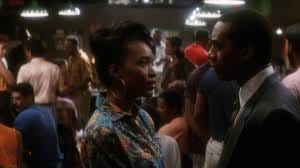
John Sayles claims, with apparent sincerity, that City of Hope’s title is not intended ironically, but the film is so frank and revealing, so pointedly critical of injustice, corruption, mendacity, and narrow-minded self-interest – diseases pandemic in the body politic of the fictional Hudson City, N.J. – that it’s difficult not to despair over the city’s general condition and evil ways whatever the specific good works of its citizens. But it is the small triumphs that Sayles celebrates – while simultaneously acknowledging the compromises necessary for their achievement and the larger defeats that threaten to render those victories insignificant and ultimately meaningless. The painfully strangled and prolonged cry for help that ends City of Hope thus can be interpreted as either an urgent call to action or an existential wail: A simple, uplifting conclusion to the film is no more possible than easy answers to Hudson City’s manifold problems.
An ambitious, richly detailed panorama of a city in decline – and rapidly approaching crisis – City of Hope addresses urban decay in the United States by poking around in Hudson City’s political garbage, turning over and exposing the contaminated dirt of patronage, bribery, and special interests, demonstrating how the toxins trickle down to the middle class and poor, seep into our attitudes and poison our thoughts. Sayles – working as writer, editor, and director – manages this by telling stories of individuals: Hudson City is not an impersonal, unfathomable monolith; it has no life outside the people who comprise it. Sayles therefore doesn’t condemn an abstraction – “the system” – but identifies and excoriates the folks who built, run, and exploit it. City of Hope features more than 30 characters – the press kit even helpfully includes a “who’s who” – and each is given a full identity, a personal history. These aren’t just stereotypes; even when we think we have a character or two firmly nailed – the renegade cop, the estranged son – they wriggle free of cliché and run in unexpected directions. Filling these roles are the members of the fine informal stock company that Sayles has built over a half-dozen films – including Vincent Spano, Joe Morton, Chris Cooper, Kevin Tighe, Maggie Renzi, David Strathairn, Josh Mostel, Michael Mantell, Bill Raymond, and Sayles himself – and such compelling additions as Tony Lo Bianco, Anthony John Denison, and Todd Graff.
Sayles interweaves a few main plot lines – involving the forced expulsion of a block’s residents to make way for a lucrative development and a mugging that escalates into an incendiary, racially divisive (and homophobic) confrontation – with dozens of minor narrative threads. Many of the stories overlap, others are largely tangential – designed to add texture, humor, and big-city vitality – but there’s no loss of control or focus, no sense of confusion. The film is beautifully shot in a form of Cinemascope by Robert Richardson, and the wide, spacious frame allows what initially appear to be minor characters in the scene’s background or screen’s edges to move forward and fill the space vacated by exiting players: Each narrative shift is thus as fluid and deft as a baton exchange in a relay.
There are occasional missteps, of course. The strained relationship between father Joe (Lo Bianco) and son Nick (Spano), for example, and especially the heavy-handed, overly pat explanation of its source – a dead brother whose spirit haunts the film like Hamlet’s father – is dealt with a little too explicitly and dismissed a little too easily. But City of Hope is filmmaking of such rare power and scope that its few faults are scarcely noticeable. A grand, passionate movie, City of Hope sweeps over us like a great wave, carrying us forward, plunging us under and tossing us up, making us gasp with thrilled wonder, disappointing us only when the ride is over and we wash, benumbed and astounded, onto the beach.